Blog

Emotions Are Energy Looking for Motion

Emotions are often treated as mental events. We talk about them, analyze them, try to manage them, or push them away. We ask where they came from and what they mean. While this kind of reflection can be helpful, it overlooks something fundamental about how emotions actually function in the body. Emotions are not just thoughts. They are physiological energy states.
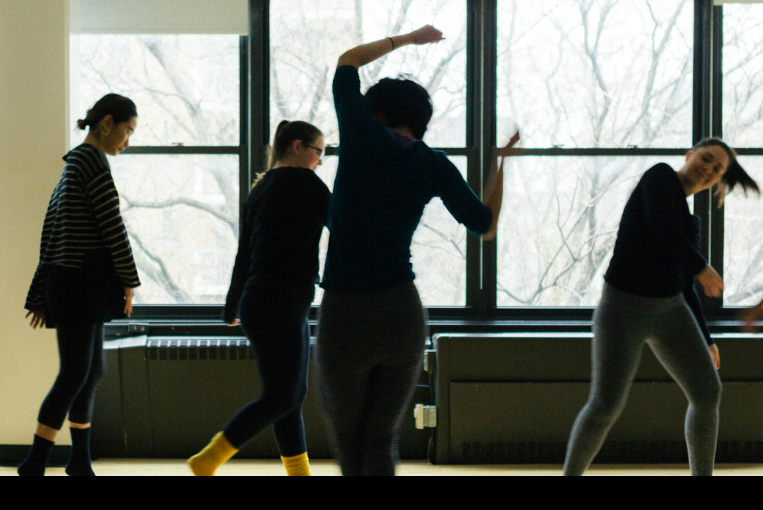
Every emotion brings a change in the body. Heart rate shifts. Breath patterns change. Muscles prepare for action or withdrawal. The nervous system mobilizes energy to respond to what is being perceived. This happens automatically, long before the mind has a chance to interpret or label the experience.

Emotion, at its core, is movement preparing to happen.

The trouble begins when that movement is interrupted.

In many situations, we are taught—explicitly or implicitly—not to move with our emotions. We stay still when we want to pace. We stay quiet when our body wants to express. We hold posture when our system wants to release. Over time, emotions that were meant to move through the body become stored instead.

This storage is not emotional weakness.
It is emotional containment.

The body holds what it is not allowed to express. That holding takes energy. It creates tension. It narrows breath. It keeps the nervous system partially activated, even when there is no immediate reason to be.

This is why emotions don’t simply disappear when we ignore them.

They wait.

They wait in tight shoulders, shallow breathing, restless legs, clenched jaws, or a constant low-level sense of agitation. The mind may not feel emotional in the moment, but the body is still carrying the charge.

Movement gives emotions somewhere to go.

Ecstatic dance provides a context where emotional energy can move without needing to be named, justified, or explained. There is no requirement to identify what you are feeling. The body doesn’t need a label to release what it’s holding. It only needs permission to respond.

When movement is self-directed, emotions often begin to shift naturally.

A heavy emotion may express itself as slow, weighted movement. A restless emotion may appear as pacing, shaking, or rhythmic repetition. A muted emotion may first show up as stillness, waiting until the system feels safe enough to engage.

All of these responses are intelligent.

Emotion does not need to look dramatic to be moving. Small movements can release large amounts of stored energy when they are aligned with the body’s needs. A gentle sway can soften grief. A repetitive motion can calm anxiety. A pause can allow anger to settle without being acted out.

This is regulation, not repression.

Ecstatic dance does not aim to amplify emotion. It allows emotion to complete its natural cycle. When emotional energy is given motion, the nervous system updates. It recognizes that expression is possible and that the energy no longer needs to be held.

People often describe feeling lighter afterward, even if nothing specific was expressed consciously. This lightness comes from discharge. Energy that was once contained has moved through.

There is often a misconception that emotional healing requires reliving or rehashing experiences. While that can be part of some processes, it is not always necessary. The body does not need to revisit the story to release the charge. It needs movement that matches the energy state.

Ecstatic dance supports this by prioritizing sensation over narrative.

Attention stays with the body rather than the meaning of what’s happening. This keeps the nervous system oriented to the present moment, where release is safer and more sustainable. Emotions move without overwhelming the system because they are not being intensified through analysis.

Over time, this changes the relationship to emotion itself.

People become less afraid of what they feel because they trust their body’s ability to move through it. Emotions no longer feel like problems to solve. They feel like signals that can be responded to physically and compassionately.

This reduces emotional buildup.

When emotions are allowed to move regularly, they don’t need to accumulate. The nervous system becomes more flexible. Emotional states come and go with less disruption. There is more capacity to feel without being flooded.

This is emotional resilience—not through control, but through flow.

Ecstatic dance does not promise emotional freedom in the sense of never feeling difficult emotions. Life continues to bring challenge, loss, and uncertainty. What changes is the body’s ability to respond.

When emotions are recognized as energy looking for motion, they are no longer feared or suppressed. They are met with movement, breath, and presence.

The body knows how to do this.

It always has.

When we stop asking emotions to behave like thoughts and start allowing them to behave like energy, something profound shifts. The system becomes more honest, more responsive, and more alive.

Emotions move.

And when they are allowed to move, they don’t have to stay.

That movement creates space.
That space creates relief.
And from that relief, clarity and steadiness naturally follow.

Sometimes the most compassionate thing we can do for our emotions is not to analyze them—but to let the body carry them forward, exactly as they are, until they complete their journey.

Blog

Why Play Is a Biological Requirement, Not a Luxury

Play is often treated as something optional. Something we outgrow. Something we earn after responsibilities are handled. Something reserved for children, vacations, or moments when life feels easy. But play is not a reward. It is a biological function.

The nervous system relies on play to stay flexible. Through play, the body explores range, tests boundaries, releases excess energy, and practices adaptation without threat. This is true across species. Young animals play not because they are carefree, but because their systems are learning how to regulate, relate, and respond to change.

Adults are no different.

What changes is not the need for play, but the permission to engage in it.

As responsibilities increase, play is often the first thing to be removed. Movement becomes functional. Expression becomes constrained. Spontaneity is replaced by efficiency. Over time, the nervous system loses one of its primary outlets for regulation.

The absence of play doesn’t usually register as a single problem.
It accumulates.

Life begins to feel heavier. Reactions become sharper. Creativity dulls. The body feels less resilient, more easily overwhelmed. Joy feels distant—not because it’s gone, but because the system that supports it has been underused.

Ecstatic dance restores play in a form that is appropriate for adults.

It does not ask people to act childish or perform happiness. It offers something more subtle and more respectful: unstructured movement without consequence. Movement that exists for its own sake. Movement that responds to curiosity rather than obligation.

This kind of play is deeply regulating.

When the body moves playfully, the nervous system shifts out of constant evaluation. Muscles soften. Breath becomes fluid. Attention widens. There is less focus on outcome and more on experience. This state allows the body to reset patterns that have become rigid through stress or repetition.

Play signals safety.

It tells the nervous system that there is room to explore, to try, to pause, to change direction. That signal reduces vigilance. And when vigilance drops, energy becomes available for healing, connection, and creativity.

Importantly, play does not require high energy.

Play can be slow.
It can be subtle.
It can be quiet.

A gentle sway. A curious stretch. A moment of improvisation that feels good without needing explanation. These small acts of play matter just as much as exuberant movement. They keep the nervous system responsive instead of locked.

Ecstatic dance removes the usual barriers to play.

There is no audience to impress.
No standard to meet.
No narrative to uphold.

This freedom allows people to rediscover movement without self-consciousness. Over time, the body remembers that movement can feel good without being productive. That expression does not have to be justified.

This remembering has ripple effects.

People often notice that after reintroducing play into their bodies, they approach life differently. Problems feel less absolute. Creativity returns. Humor surfaces more easily. There is more tolerance for uncertainty because the nervous system is no longer operating at its limit.

Play also supports emotional resilience.

A nervous system that plays regularly can move between states more fluidly. It can engage and disengage without getting stuck. This flexibility makes it easier to recover from stress, disappointment, or conflict. Life still happens—but it doesn’t lodge as deeply.

This is why play is not a luxury.

It is maintenance.

Ecstatic dance honors this truth by giving adults a socially safe space to move without purpose. To explore without explanation. To feel without interpretation. This isn’t indulgence. It’s care.

When play is restored, joy often follows—not as forced positivity, but as a natural byproduct of a system that feels alive and capable again.

The body does not need play to escape reality.

It needs play to stay responsive within it.

When we stop treating play as optional, we begin to understand why joy returns not when life becomes easier—but when the nervous system is allowed to move freely again.

Play keeps the body adaptable.
Adaptability supports resilience.
And resilience is what allows joy to stay.

That is not luxury.

That is biology.

Blog

Why Insight Often Arrives After Movement

Insight is often treated as a mental event. We expect it to arrive through thinking, reflection, or analysis. We sit with questions, search for answers, and wait for clarity to appear in the form of words or realizations. Sometimes it does. But just as often, insight remains just out of reach—felt vaguely, sensed dimly, but not fully formed. This can create frustration. The mind keeps circling the same questions, hoping that one more pass will finally unlock understanding. Yet many of the insights we’re waiting for don’t originate in thought at all. They arise after movement.

The body processes experience continuously. It registers changes in environment, emotion, and energy long before the mind organizes them into meaning. When the body is still, especially under stress or pressure, that processing can stall. Information remains unintegrated, held as tension or sensation rather than understanding.

Movement restarts the process.

When the body moves freely, systems that were paused begin communicating again. Breath deepens. Circulation improves. The nervous system shifts toward regulation. Sensory awareness increases. These changes create the conditions for integration—the moment when experience turns into understanding.

This is why insight often appears after movement, not during effortful thinking.

Ecstatic dance supports this sequence naturally.

Because movement is unstructured, the body isn’t trying to achieve anything specific. It follows impulse rather than instruction. This allows attention to drop out of problem-solving mode and into direct experience. Awareness becomes embodied rather than conceptual.

As the body moves, it sorts.
As it sorts, it settles.
As it settles, clarity emerges.

Often, the insight doesn’t announce itself right away. It may arrive later that day, or the next morning, or in a quiet moment when the mind is no longer pushing for answers. Suddenly, something makes sense. A decision feels clearer. A pattern is recognized without effort.

Nothing new was added.
Something was integrated.

This kind of insight feels different from intellectual conclusions. It doesn’t need to be defended or explained. It feels obvious in the body first, and then in the mind. There is a sense of rightness that doesn’t come from logic alone.

Movement makes this possible because it engages the whole system.

Thought-based insight relies heavily on the mind’s current capacity. When that capacity is taxed—by stress, fatigue, or emotional load—clarity suffers. Movement lightens that load. It redistributes effort across the body, allowing the mind to relax its grip.

When the mind relaxes, it becomes receptive rather than forceful.

Ecstatic dance also reduces the pressure to figure things out. There is no agenda for insight. No expectation of revelation. This lack of pressure is essential. Insight that is demanded often stays away. Insight that is allowed tends to arrive.

Many people notice that after moving, questions feel different. Less urgent. Less charged. Sometimes the question dissolves entirely, replaced by a sense of direction that doesn’t require explanation.

This is not mystical.
It is biological.

A regulated nervous system supports integration. Integration supports clarity. Clarity supports insight.

The order matters.

Trying to think your way into insight while the body is overloaded is like trying to hear a whisper in a noisy room. Movement quiets the room. Not by forcing silence, but by allowing energy to move where it needs to go.

Over time, people learn to trust this rhythm. They stop chasing insight through effort and begin allowing it to surface through embodiment. They move first. They listen later.

This doesn’t diminish the role of the mind. It supports it.

When the body is included, insight no longer has to fight its way through tension and noise. It arrives gently, often unexpectedly, and settles easily.

Sometimes the most direct path to understanding isn’t more thinking.

It’s movement—followed by stillness.

That is often where insight has been waiting all along.

Blog

Awareness Expands When the Body Is Included

Many people come to awareness through observation. They learn to watch their thoughts. To notice patterns. To step back and witness what’s happening inside. This kind of awareness can be valuable. It creates perspective. It helps reduce reactivity. It offers space between stimulus and response. But awareness that stays only in the mind has limits. It can become distant. Detached. More like monitoring than inhabiting.

The body is not separate from awareness. It is one of its primary gateways.

When attention moves into sensation—into breath, weight, rhythm, and impulse—awareness changes quality. It becomes less conceptual and more immediate. Less about understanding and more about being here.

Ecstatic dance invites this shift gently.

There is no instruction to focus. No technique to master. Awareness naturally follows movement because movement is happening now. The body does not operate in past or future. It responds to the present moment by design.

As people move, they often notice that awareness widens without effort. Sensation becomes clearer. Subtle changes are easier to feel. The mind quiets not because it was silenced, but because it is no longer carrying the full responsibility of attention.

This is expansion without strain.

Instead of trying to reach heightened states, the body offers grounded presence. Instead of seeking insight, awareness arrives through experience. Movement becomes a conversation between attention and sensation, each informing the other.

Sometimes this feels spacious.
Sometimes it feels calm.
Sometimes it feels simply real.

There is no need to label it.

Conscious expansion does not always look dramatic. Often it looks like clarity. Like simplicity. Like being less divided between what you think and what you feel. When the body is included, awareness becomes whole.

This inclusion also brings humility. The body reveals truths the mind may overlook. It shows where tension remains, where energy flows easily, where boundaries exist. Awareness deepens not by rising above the physical, but by moving fully into it.

Ecstatic dance supports this integration naturally. It doesn’t ask you to transcend the body. It asks you to listen to it. And in doing so, awareness stops hovering and starts inhabiting.

Expansion happens not by leaving the body behind—but by letting it participate.

When the body is welcomed into awareness, presence becomes lived rather than observed.

And that changes everything.