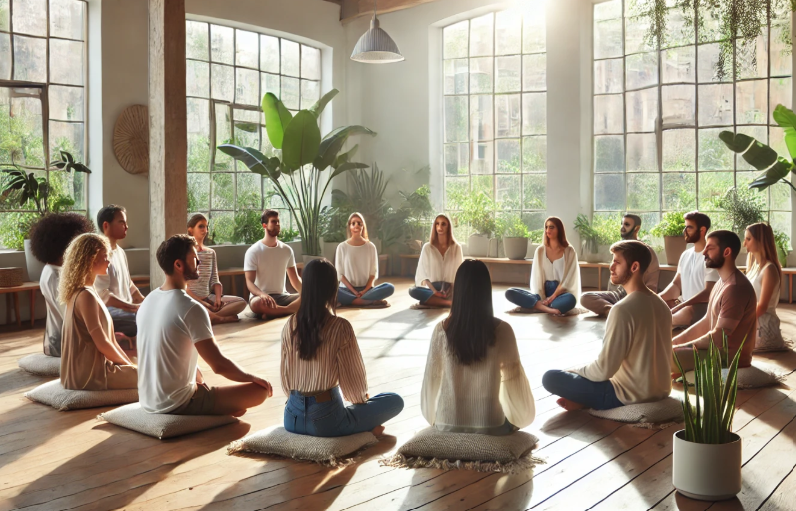
Stillness has its place. Rest is necessary. Pauses are essential. The nervous system needs moments of quiet to integrate, repair, and restore. But stillness was never meant to be the dominant state of the human body. It was meant to be one phase in a larger rhythm that includes movement, expression, and release. When stillness becomes constant, the nervous system struggles.
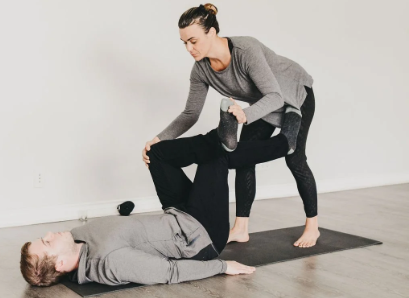
The human nervous system evolved in motion. It learned regulation through walking, reaching, turning, running, stretching, and resting in cycles that flowed naturally throughout the day. Movement wasn’t something scheduled or intentional. It was simply how life happened.
Modern life has changed that pattern.
Many people spend long hours sitting, often holding the same posture while processing large amounts of information. The body remains physically still while the nervous system stays mentally active. This mismatch creates strain. The system is alert, engaged, and responsive—but without the movement it needs to complete its cycles.
Over time, this imbalance accumulates.
The nervous system doesn’t discharge stimulation properly. Muscles remain subtly contracted. Breath becomes shallow without being noticed. Sensory input increases, but physical output decreases. The body is taking in far more than it is allowed to move out.
This isn’t a personal failing.
It’s a systemic one.
The nervous system is not designed to regulate through thinking alone. It regulates through motion. Through shifts in posture. Through changes in rhythm. Through physical responses that signal completion and safety.
When movement is limited, regulation becomes harder to access.
Ecstatic dance restores a missing piece of this equation.
It offers movement that is continuous, self-directed, and responsive rather than repetitive or imposed. This kind of movement speaks directly to the nervous system. It provides the signals the body has been waiting for: You can move now. You can change. You can complete.
These signals are deeply calming.
As people begin to move freely, the nervous system starts to reorganize. Breath synchronizes with motion. Muscles release tension in stages rather than all at once. Attention drops out of constant scanning and into present-moment awareness. This is not relaxation in the passive sense—it is regulation through engagement.
Movement allows the nervous system to cycle naturally.
Activation rises and falls. Energy builds and dissipates. Rest appears organically when it’s needed. These cycles cannot be forced through stillness alone. They require motion to reset.
This is why many people feel restless or anxious when they try to sit still for long periods, even when nothing appears to be wrong. The body is asking for movement—not as exercise, but as regulation.
Ecstatic dance meets this need without overloading the system.
There is no demand for endurance or intensity. The movement adapts to the body’s capacity in the moment. Some days the nervous system wants slow, grounding motion. Other days it wants rhythm, repetition, or expansion. Both are appropriate. Both are intelligent.
When movement is chosen rather than prescribed, the nervous system feels respected.
That respect changes everything.
People often notice that after moving this way, they feel more settled even though they’ve been active. This can feel counterintuitive. We’re taught that calming down means slowing down. But for a nervous system that has been overstimulated while physically still, movement is what creates calm.
Calm comes from completion, not suppression.
The nervous system needs to do something with the energy it has gathered. When it’s allowed to move, it discharges excess stimulation and returns toward balance. When it’s not, that energy remains trapped, showing up as tension, irritability, or fatigue.
This is especially relevant for emotional stress.
Emotions activate the nervous system just as physical threats do. They prepare the body for response. When those responses are interrupted—by social norms, schedules, or expectations—the nervous system stays activated. Movement gives it a safe exit.
Ecstatic dance provides that exit without requiring explanation.
The body doesn’t need to know why it’s moving.
It only needs to move.
Over time, regular movement restores trust between the body and the nervous system. The system learns that activation will be followed by release. It no longer has to stay on guard. This reduces baseline stress and increases resilience.
People feel more capable not because life is easier, but because their nervous system is no longer overloaded by stillness.
Stillness becomes nourishing again once movement has been restored to its rightful place.
The nervous system was never meant to be parked for long periods while remaining alert. It was designed for rhythm—for movement and rest to alternate in ways that support life.
Ecstatic dance honors this design.
It reminds the body that it is allowed to move, change, and respond. That regulation doesn’t come from forcing calm, but from allowing motion to do what it has always done best.
Move energy through.
When the nervous system is given movement, it doesn’t fight for attention. It settles. It adapts. It recovers.
Not because it was instructed to relax—but because it was finally allowed to move the way it was designed to.
And in that movement, balance becomes possible again.