
The body is designed to move things through. Breath moves air. Blood moves nutrients. Lymph moves waste. Nerves move information. Emotions move energy. When these systems flow, we tend to feel well without thinking much about it. When they slow down or stall, the body lets us know—often quietly at first, then more insistently over time.
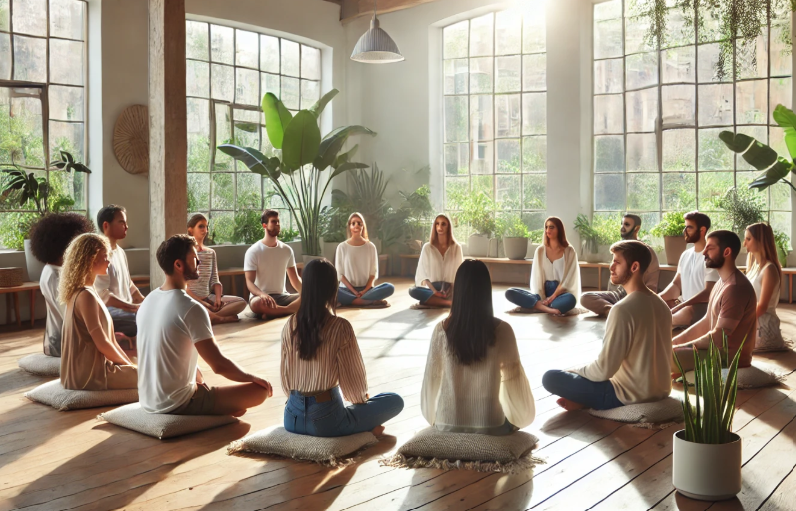
Stagnation doesn’t always announce itself as illness right away. Sometimes it arrives as heaviness. As fatigue that sleep doesn’t quite fix. As stiffness, fogginess, irritability, or a low-level sense that something feels “off,” even when tests come back normal.
This is not the body malfunctioning.
It is the body communicating.
Modern life encourages stagnation in subtle ways. We sit for long periods. We override natural impulses to stretch, sway, pace, or rest. We carry emotional weight without a socially acceptable outlet for release. Over time, what isn’t allowed to move begins to accumulate.
The body feels this accumulation long before the mind does.
Movement is one of the body’s primary ways of restoring circulation—not just physically, but systemically. When movement is spontaneous and self-directed, it engages multiple systems at once. Muscles contract and release. Breath deepens. Fluids shift. The nervous system recalibrates. Energy that has been held in place begins to travel again.
Ecstatic dance supports this kind of circulation without force.
Unlike structured exercise, there is no external goal to reach. No pace to maintain. No form to perfect. The body moves according to sensation rather than instruction, which allows circulation to happen where it’s needed most—not where it’s expected.
Sometimes movement flows easily.
Sometimes it meets resistance.
That resistance is not something to push through. It’s information.
A place that doesn’t want to move is often a place that hasn’t felt safe to move in a long time. When the body is given permission to approach that area slowly—without judgment or demand—circulation begins to return organically. Warmth spreads. Breath shifts. Tension softens in increments the nervous system can tolerate.
This is why forced movement can sometimes feel depleting, while gentle movement feels restorative.
Circulation is not about intensity.
It’s about continuity.
Ecstatic dance restores continuity by allowing movement to arise from within. The body chooses where to go, how fast, and for how long. This autonomy is essential. It tells the nervous system that it is no longer being overridden, which immediately improves flow.
People often notice that after moving this way, they feel clearer. Not energized in a stimulated sense, but unclogged. Digestion improves. Sleep deepens. Mood stabilizes. These are not side effects—they are signs that circulation has been restored.
Stagnation doesn’t only affect the physical body.
Emotional stagnation can feel just as uncomfortable. Unexpressed feelings don’t disappear. They settle. They wait. They influence posture, breath, and movement patterns without asking permission. When the body is allowed to move freely, these emotions often begin to shift without needing to be named.
Not analyzed.
Not explained.
Just moved.
This is one of the reasons people feel “better” after movement even when they can’t articulate why. Something has changed at a level beneath language. Circulation has resumed.
Illness, discomfort, and fatigue are complex and multifaceted, but stagnation is often part of the picture. Not as a moral failing or lifestyle mistake—but as a natural outcome of a world that limits expression and stillness at the same time.
Ecstatic dance offers a counterbalance.
It reminds the body how to keep things moving without urgency. How to restore flow without pressure. How to listen for where circulation is needed instead of imposing it from the outside.
Movement as circulation is not about fixing the body.
It’s about cooperating with it.
When the body is allowed to move what has been held, it often does so with quiet efficiency. And when circulation returns, the body doesn’t have to work as hard to signal distress.
Stagnation begins to soften.
And with that softening, many people rediscover what ease actually feels like—not as an achievement, but as a natural state the body remembers when it’s allowed to move again.