
Blog

Emotions Are Energy Looking for Motion

Emotions are often treated as mental events. We talk about them, analyze them, try to manage them, or push them away. We ask where they came from and what they mean. While this kind of reflection can be helpful, it overlooks something fundamental about how emotions actually function in the body. Emotions are not just thoughts. They are physiological energy states.
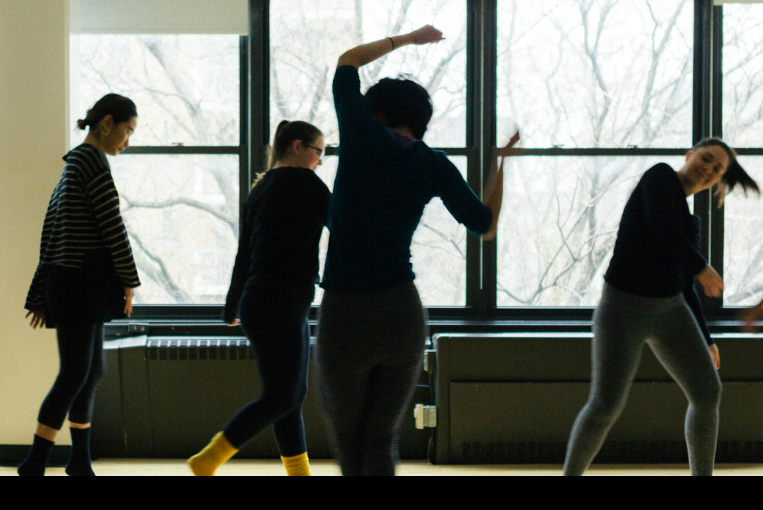
Every emotion brings a change in the body. Heart rate shifts. Breath patterns change. Muscles prepare for action or withdrawal. The nervous system mobilizes energy to respond to what is being perceived. This happens automatically, long before the mind has a chance to interpret or label the experience.

Emotion, at its core, is movement preparing to happen.

The trouble begins when that movement is interrupted.

In many situations, we are taught—explicitly or implicitly—not to move with our emotions. We stay still when we want to pace. We stay quiet when our body wants to express. We hold posture when our system wants to release. Over time, emotions that were meant to move through the body become stored instead.

This storage is not emotional weakness.
It is emotional containment.

The body holds what it is not allowed to express. That holding takes energy. It creates tension. It narrows breath. It keeps the nervous system partially activated, even when there is no immediate reason to be.

This is why emotions don’t simply disappear when we ignore them.

They wait.

They wait in tight shoulders, shallow breathing, restless legs, clenched jaws, or a constant low-level sense of agitation. The mind may not feel emotional in the moment, but the body is still carrying the charge.

Movement gives emotions somewhere to go.

Ecstatic dance provides a context where emotional energy can move without needing to be named, justified, or explained. There is no requirement to identify what you are feeling. The body doesn’t need a label to release what it’s holding. It only needs permission to respond.

When movement is self-directed, emotions often begin to shift naturally.

A heavy emotion may express itself as slow, weighted movement. A restless emotion may appear as pacing, shaking, or rhythmic repetition. A muted emotion may first show up as stillness, waiting until the system feels safe enough to engage.

All of these responses are intelligent.

Emotion does not need to look dramatic to be moving. Small movements can release large amounts of stored energy when they are aligned with the body’s needs. A gentle sway can soften grief. A repetitive motion can calm anxiety. A pause can allow anger to settle without being acted out.

This is regulation, not repression.

Ecstatic dance does not aim to amplify emotion. It allows emotion to complete its natural cycle. When emotional energy is given motion, the nervous system updates. It recognizes that expression is possible and that the energy no longer needs to be held.

People often describe feeling lighter afterward, even if nothing specific was expressed consciously. This lightness comes from discharge. Energy that was once contained has moved through.

There is often a misconception that emotional healing requires reliving or rehashing experiences. While that can be part of some processes, it is not always necessary. The body does not need to revisit the story to release the charge. It needs movement that matches the energy state.

Ecstatic dance supports this by prioritizing sensation over narrative.

Attention stays with the body rather than the meaning of what’s happening. This keeps the nervous system oriented to the present moment, where release is safer and more sustainable. Emotions move without overwhelming the system because they are not being intensified through analysis.

Over time, this changes the relationship to emotion itself.

People become less afraid of what they feel because they trust their body’s ability to move through it. Emotions no longer feel like problems to solve. They feel like signals that can be responded to physically and compassionately.

This reduces emotional buildup.

When emotions are allowed to move regularly, they don’t need to accumulate. The nervous system becomes more flexible. Emotional states come and go with less disruption. There is more capacity to feel without being flooded.

This is emotional resilience—not through control, but through flow.

Ecstatic dance does not promise emotional freedom in the sense of never feeling difficult emotions. Life continues to bring challenge, loss, and uncertainty. What changes is the body’s ability to respond.

When emotions are recognized as energy looking for motion, they are no longer feared or suppressed. They are met with movement, breath, and presence.

The body knows how to do this.

It always has.

When we stop asking emotions to behave like thoughts and start allowing them to behave like energy, something profound shifts. The system becomes more honest, more responsive, and more alive.

Emotions move.

And when they are allowed to move, they don’t have to stay.

That movement creates space.
That space creates relief.
And from that relief, clarity and steadiness naturally follow.

Sometimes the most compassionate thing we can do for our emotions is not to analyze them—but to let the body carry them forward, exactly as they are, until they complete their journey.

Blog

Why Every Body’s Movement Is Valid

Many people hesitate before entering a movement space because they’re carrying an unspoken question. Am I doing this right? That question doesn’t come from curiosity. It comes from years of conditioning. Most of us learned early on that movement is evaluated. There are correct forms, acceptable expressions, and invisible standards that determine whether a body belongs or doesn’t. Over time, those standards become internalized.

We stop listening to our bodies and start monitoring them instead. We adjust movement before it even happens. We override impulses that feel unfamiliar. We learn to keep certain expressions small, quiet, or invisible—especially if they don’t match what we’ve been told movement should look like.

Ecstatic dance gently dissolves this hierarchy.

In this practice, there is no correct movement. There is only honest movement. Movement that arises from sensation, not imitation. From impulse, not instruction. From presence, not performance.

This is why every body’s movement is valid.

Validity doesn’t come from aesthetics.
It doesn’t come from rhythm.
It doesn’t come from range or flexibility.

It comes from authenticity.

When movement is self-led, the body reveals what it actually needs. Sometimes that need looks expressive. Sometimes it looks restrained. Sometimes it looks like very little at all. A small shift of weight. A subtle turn of the head. A long pause that allows internal movement to happen quietly.

These movements matter.

They matter because they reflect real-time information from the nervous system. When a body moves slowly, it may be regulating. When it moves repetitively, it may be settling. When it stays still, it may be integrating. None of these states are lesser than others.

They are intelligent responses.

Ecstatic dance removes comparison by design. There is no choreography to follow, no leader to mirror, no expectation to synchronize. Each person becomes their own reference point. This shifts attention inward, where movement becomes less about how it looks and more about how it feels.

This shift is profoundly regulating.

When people stop evaluating themselves, tension decreases. Breath deepens. The body becomes more available to sensation. In this state, movement naturally organizes itself in ways that support balance and release.

Judgment interrupts this process.

When we judge our movement, we reintroduce vigilance. The nervous system tightens. Expression narrows. The body prepares to be corrected rather than supported. Ecstatic dance offers an alternative: a space where judgment is unnecessary because nothing is being measured.

This doesn’t mean boundaries disappear.

Movement remains contained by self-awareness and respect for shared space. Validity does not mean disregard. It means responsibility that comes from presence rather than rules imposed from outside.

In this environment, people often discover movement they didn’t know they were allowed to have.

Gentle movement that feels nourishing.
Awkward movement that releases tension.
Repetitive movement that soothes.
Stillness that feels complete rather than frozen.

As these discoveries accumulate, something deeper changes.

People begin to trust their bodies again.

They stop asking whether their movement makes sense and start noticing whether it feels right. That trust extends beyond the dance space. It shows up in daily decisions, boundaries, and self-expression. The body becomes a source of guidance rather than a problem to manage.

This is why validity matters.

When movement is validated internally, the body no longer needs external permission to exist as it is. It no longer has to earn its place through performance or conformity. It can respond honestly to the moment at hand.

Ecstatic dance is not about expressing more.

It is about expressing truthfully.

For some bodies, truth looks expansive.
For others, it looks contained.
For many, it changes from moment to moment.

All of it belongs.

When every body’s movement is treated as valid, something subtle but powerful happens. People soften. Comparison fades. Safety increases. The room becomes quieter—not in volume, but in pressure.

This quiet allows deeper listening.

And when bodies are listened to rather than judged, they tend to move toward balance on their own. Not because they were instructed to—but because they were trusted.

That trust is the foundation of this practice.

Every body carries its own rhythm.
Every nervous system has its own timing.
Every movement has its own reason for being there.

Ecstatic dance honors this diversity by refusing to rank it.

When movement is allowed to be exactly what it is, the body doesn’t have to perform worthiness.

It can simply move.

And that, in itself, is healing.


Blog

The Body Remembers What the Mind Learned to Forget

There are experiences the mind moves away from in order to keep going. It does this intelligently. It filters. It compartmentalizes. It helps us function, work, care for others, and survive moments that would otherwise be overwhelming. This forgetting is not failure. It is protection. But while the mind learns how to move on, the body remembers. Not as stories. Not as images, but as sensation.

A tight jaw that never quite relaxes.
A shallow breath that feels normal now.
A constant readiness in the shoulders or hips.
A sense of being alert even in safe moments.

These are not problems to be fixed. They are signals of a system that adapted beautifully at the time and was never given the opportunity to complete what it started.

Trauma is not only what happened.
It is what the body prepared for that never got resolved.

Ecstatic dance offers a gentle doorway into that completion.

There is no requirement to recall memories or name events. The body doesn’t need a narrative to release what it’s been holding. It only needs conditions that feel safe enough to soften. Rhythm. Space. Permission. Choice.

When movement is unstructured and self-led, the body begins to express in its own language. Sometimes that language is subtle. A sway. A stretch. A pause. Other times it may look like shaking, circling, or slowing down far more than expected.

Nothing is forced.
Nothing is interpreted.
Nothing is rushed.

This is important.

Trauma release is not something to do. It is something to allow.

The nervous system cannot be argued into safety. It must experience it. When the body senses that it is no longer required to stay braced, it begins to let go in small, intelligent increments. Often so small that the mind barely notices—until afterward.

People sometimes describe feeling unexpectedly calm. Or grounded. Or tired in a way that feels clean rather than depleted. Others notice that reactions soften in the days that follow. Triggers lose some of their charge. Sleep deepens. Breath becomes fuller without effort.

There may be no dramatic moment to point to.
Just a quiet shift.

This is how the body completes unfinished responses. Gently. Privately. At its own pace.

Ecstatic dance is not about reliving trauma. It is about restoring choice. Choice to move. Choice to stop. Choice to feel. Choice to rest. Choice to express or remain still.

This sense of agency is central to healing.

When the body is no longer overridden, when it is listened to rather than directed, it begins to trust again. And with that trust comes release—not because it was demanded, but because it was finally safe to do so.

The mind may never need to remember everything it forgot.

The body already knows what to do with it.