
Blog

Why Every Body’s Movement Is Valid

Many people hesitate before entering a movement space because they’re carrying an unspoken question. Am I doing this right? That question doesn’t come from curiosity. It comes from years of conditioning. Most of us learned early on that movement is evaluated. There are correct forms, acceptable expressions, and invisible standards that determine whether a body belongs or doesn’t. Over time, those standards become internalized.
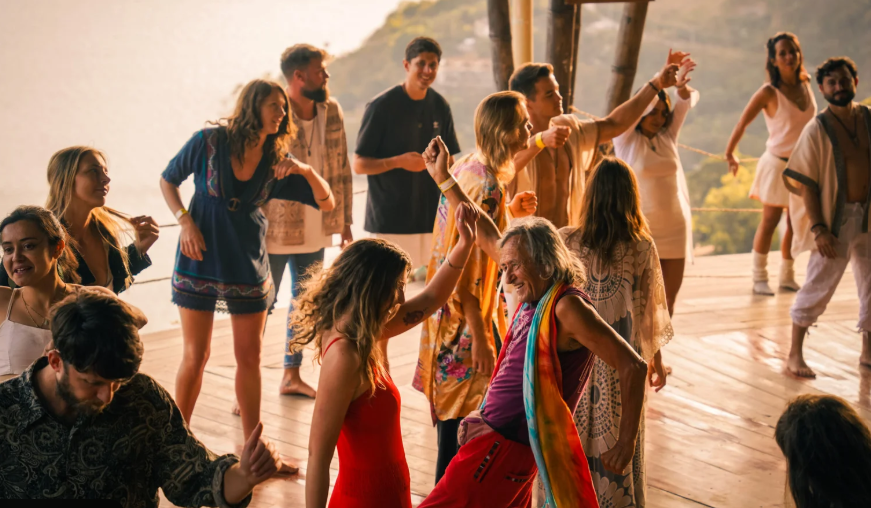
We stop listening to our bodies and start monitoring them instead. We adjust movement before it even happens. We override impulses that feel unfamiliar. We learn to keep certain expressions small, quiet, or invisible—especially if they don’t match what we’ve been told movement should look like.

Ecstatic dance gently dissolves this hierarchy.

In this practice, there is no correct movement. There is only honest movement. Movement that arises from sensation, not imitation. From impulse, not instruction. From presence, not performance.

This is why every body’s movement is valid.

Validity doesn’t come from aesthetics.
It doesn’t come from rhythm.
It doesn’t come from range or flexibility.

It comes from authenticity.

When movement is self-led, the body reveals what it actually needs. Sometimes that need looks expressive. Sometimes it looks restrained. Sometimes it looks like very little at all. A small shift of weight. A subtle turn of the head. A long pause that allows internal movement to happen quietly.

These movements matter.

They matter because they reflect real-time information from the nervous system. When a body moves slowly, it may be regulating. When it moves repetitively, it may be settling. When it stays still, it may be integrating. None of these states are lesser than others.

They are intelligent responses.

Ecstatic dance removes comparison by design. There is no choreography to follow, no leader to mirror, no expectation to synchronize. Each person becomes their own reference point. This shifts attention inward, where movement becomes less about how it looks and more about how it feels.

This shift is profoundly regulating.

When people stop evaluating themselves, tension decreases. Breath deepens. The body becomes more available to sensation. In this state, movement naturally organizes itself in ways that support balance and release.

Judgment interrupts this process.

When we judge our movement, we reintroduce vigilance. The nervous system tightens. Expression narrows. The body prepares to be corrected rather than supported. Ecstatic dance offers an alternative: a space where judgment is unnecessary because nothing is being measured.

This doesn’t mean boundaries disappear.

Movement remains contained by self-awareness and respect for shared space. Validity does not mean disregard. It means responsibility that comes from presence rather than rules imposed from outside.

In this environment, people often discover movement they didn’t know they were allowed to have.

Gentle movement that feels nourishing.
Awkward movement that releases tension.
Repetitive movement that soothes.
Stillness that feels complete rather than frozen.

As these discoveries accumulate, something deeper changes.

People begin to trust their bodies again.

They stop asking whether their movement makes sense and start noticing whether it feels right. That trust extends beyond the dance space. It shows up in daily decisions, boundaries, and self-expression. The body becomes a source of guidance rather than a problem to manage.

This is why validity matters.

When movement is validated internally, the body no longer needs external permission to exist as it is. It no longer has to earn its place through performance or conformity. It can respond honestly to the moment at hand.

Ecstatic dance is not about expressing more.

It is about expressing truthfully.

For some bodies, truth looks expansive.
For others, it looks contained.
For many, it changes from moment to moment.

All of it belongs.

When every body’s movement is treated as valid, something subtle but powerful happens. People soften. Comparison fades. Safety increases. The room becomes quieter—not in volume, but in pressure.

This quiet allows deeper listening.

And when bodies are listened to rather than judged, they tend to move toward balance on their own. Not because they were instructed to—but because they were trusted.

That trust is the foundation of this practice.

Every body carries its own rhythm.
Every nervous system has its own timing.
Every movement has its own reason for being there.

Ecstatic dance honors this diversity by refusing to rank it.

When movement is allowed to be exactly what it is, the body doesn’t have to perform worthiness.

It can simply move.

And that, in itself, is healing.
 

Blog

Completing the Stress Response the Body Never Got to Finish

The body is built for resolution. When a stressful event occurs, the nervous system mobilizes quickly. Muscles tense. Breath sharpens. Attention narrows. Energy floods the system to prepare for action. This response is efficient, protective, and necessary. The problem isn’t the stress response itself. The problem is what happens when that response is never allowed to complete.

In nature, stress moves through the body and then releases. Animals shake, stretch, run, or rest once danger has passed. Their nervous systems return to baseline because the cycle finishes. Humans, however, often interrupt this process. We stay still when we want to move. We stay quiet when we want to express. We keep going when the body is asking to stop.

Over time, unfinished stress accumulates.

This accumulation doesn’t always feel dramatic. It can show up as chronic tension, fatigue, irritability, or a constant low-level alertness that never quite turns off. The body remains prepared for something that is no longer happening.

This is not psychological weakness.
It is physiological incompletion.

Ecstatic dance creates conditions where the body can gently finish what was paused.

Because movement is self-directed and unstructured, the body chooses what it needs. Sometimes that looks like slow, repetitive motion. Sometimes it looks like shaking or swaying. Sometimes it looks like stillness that allows internal movement to occur.

These movements are not random.

They are expressions of the nervous system discharging stored energy. Small tremors, subtle rocking, and rhythmic repetition help the body release what it has been holding. When allowed to happen without interruption or interpretation, these movements complete the stress cycle naturally.

There is no need to revisit memories.
No need to identify triggers.
No need to explain what’s happening.

The body doesn’t require context to release tension. It only needs permission and safety.

This is why completion often feels anticlimactic. There may be no emotional story attached. No insight to report. Just a sense of settling. Muscles feel heavier. Breath becomes fuller. The body feels more here.

Completion is quiet.

Afterward, people often notice changes that seem unrelated at first. Sleep improves. Reactions soften. Focus returns. The system no longer behaves as if it is bracing for impact. These shifts are signs that the nervous system has updated its internal state.

It recognizes that the threat has passed.

Ecstatic dance supports this update by restoring choice. The body is not pushed into release. It is not asked to perform. It is allowed to respond in its own timing. This autonomy is essential, especially for bodies that have learned to stay vigilant.

Forcing release can reinforce the very patterns it’s trying to undo.

Completion happens when the body feels safe enough to let go.

This is why gentle movement is often more effective than intense expression. Intensity can feel overwhelming to a system already overloaded. Slow, attuned movement allows discharge without reactivation.

There is also dignity in this process.

The body is not being fixed. It is being respected. Its adaptations are honored rather than criticized. The movements that arise are not symptoms—they are intelligence finishing its work.

Over time, as stress responses complete more regularly, the body becomes less reactive. It doesn’t need to store as much because it trusts that release is possible. This trust reduces the likelihood of accumulation in the first place.

Life still brings stress.
But it doesn’t stay as long.

Ecstatic dance does not promise to erase what has happened. It offers something more realistic and more sustainable: a way for the body to complete what it could not complete at the time.

When stress responses are allowed to finish, the body doesn’t have to hold the past in the present.

It can rest.

And from that rest, resilience grows—not through effort, but through completion.

Blog

What the Ecstatic Dancie Movement Is—and What It Is Not

The Ecstatic Dancie movement is often misunderstood before it’s experienced. People hear the word dance and imagine choreography, steps, or performance. They hear the word ecstatic and assume intensity, spectacle, or emotional excess. These assumptions can create hesitation, especially for those who are already sensitive, overwhelmed, or unsure whether they “belong” in movement spaces. But ecstatic dance, as I practice and share it, is none of those things.

The Ecstatic Dancie Movement is Not:

    • a performance.
    • a workout.
    • a spiritual requirement.
    • a release that needs to look dramatic.

Ecstatic dancie is a listening practice.

At its core, it is a space where the body is allowed to move without instruction, correction, or expectation. There are no steps to learn, no shapes to achieve, and no energy to maintain. The body leads. The mind follows—if it wants to.

This distinction matters.

So much of modern life requires us to override our bodies. We sit when we want to move. We push through fatigue. We suppress impulses that don’t fit the moment. Over time, this creates a quiet disconnection. We stop trusting sensation and start relying almost entirely on thought.

Ecstatic dance gently reverses that pattern.

By removing choreography and performance, the body is no longer trying to get it right. There is no external reference point. Movement arises from sensation—weight shifting, breath deepening, energy rising or settling. Sometimes the movement is large. Often it is subtle. Both are valid.

This is what ecstatic dance is.

What it is not, is chaotic or uncontained.

Freedom does not mean lack of structure. The structure is internal. Boundaries exist through self-awareness, not rules imposed from the outside. Each person moves within their own space, guided by their own nervous system. This creates safety—not through control, but through presence.

Ecstatic dance is also not about emotional discharge for its own sake.

While release can happen, it is not the goal. The goal is listening. Release occurs naturally when the body feels heard. Sometimes that looks like shaking or stretching. Sometimes it looks like stillness. Sometimes nothing obvious happens at all—and that is just as meaningful.

There is no pressure to feel anything specific.

This is especially important for people who have been through trauma, burnout, or long-term stress. The body does not always want to move quickly or express outwardly. Ecstatic dance respects that. It allows the pace to be set from within.

Another common misconception is that ecstatic dance is about losing control.

In reality, it often restores it.

When the body is trusted to lead, a sense of agency returns. Choice becomes embodied. You move when you want to move. You stop when you want to stop. You rest when rest is needed. This reinforces a deep internal message: I am safe to listen to myself.

That message carries far beyond the dance space.

Over time, people notice that they make decisions with more clarity. They recognize boundaries sooner. They feel less compelled to override discomfort or force themselves into roles that don’t fit. This isn’t because they learned something new—it’s because they remembered something old.

Ecstatic dance is not about escaping the body.

It is about returning to it.

It doesn’t promise transformation.
It doesn’t demand belief.
It doesn’t ask for interpretation.

It simply offers a space where the body can speak in its own language—and be respected for doing so.

And often, that is more than enough.