
Most communication challenges aren’t caused by poor wording. They come from bodies that don’t feel settled. When the nervous system is tense or guarded, even kind words can land wrong. Tone sharpens without intention. Listening narrows. Reactions arrive faster than understanding. We may say the right thing, but our body is signaling something else entirely. Communication doesn’t begin with language. It begins with regulation.
A regulated body is one that feels safe enough to stay present. Breath moves freely. Muscles aren’t braced for impact. Attention is available instead of defensive. From this state, connection becomes simpler—not because people are trying harder, but because their system isn’t working against them.
Ecstatic dance supports this kind of regulation naturally.
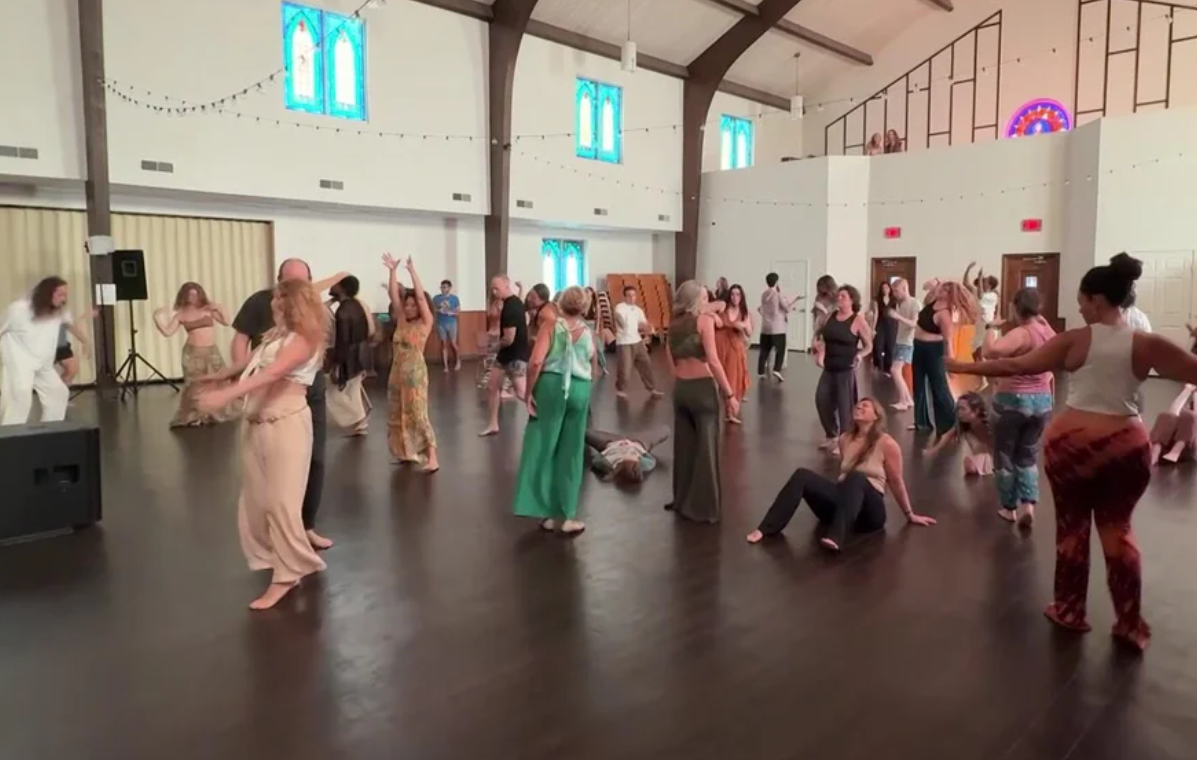
When people move without being watched, corrected, or evaluated, the nervous system downshifts. There is no social role to maintain. No performance to manage. The body is allowed to arrive as it is. Over time, this creates a felt sense of safety that carries beyond the dance space.
And that safety changes how we relate.
People who feel more at home in their bodies tend to listen differently. They pause more easily. They respond instead of react. They can stay present during discomfort without needing to fix, defend, or withdraw.
This isn’t a communication technique.
It’s a physiological state.
Shared movement also builds a quiet form of connection that doesn’t rely on explanation. Moving in the same space, at the same time, without expectation, creates attunement. Not intimacy in the romantic sense—but familiarity. Recognition. Ease.
This kind of connection is subtle, but it matters.
When bodies are regulated, trust forms faster. Boundaries become clearer without needing to be rigid. Differences feel less threatening. Conversation flows with more patience because the system underneath it isn’t rushed.
Ecstatic dance doesn’t teach people how to communicate with others directly. It helps people communicate with themselves first. And when that internal relationship becomes steadier, external relationships benefit naturally.
People often notice that interactions feel less effortful afterward. There’s less overthinking. Less bracing. Less need to manage impressions. Communication becomes more honest because the body is no longer signaling danger where there is none.
Regulation creates room for connection.
When bodies feel safe, words don’t have to work so hard.