Blog

What the Ecstatic Dancie Movement Is—and What It Is Not

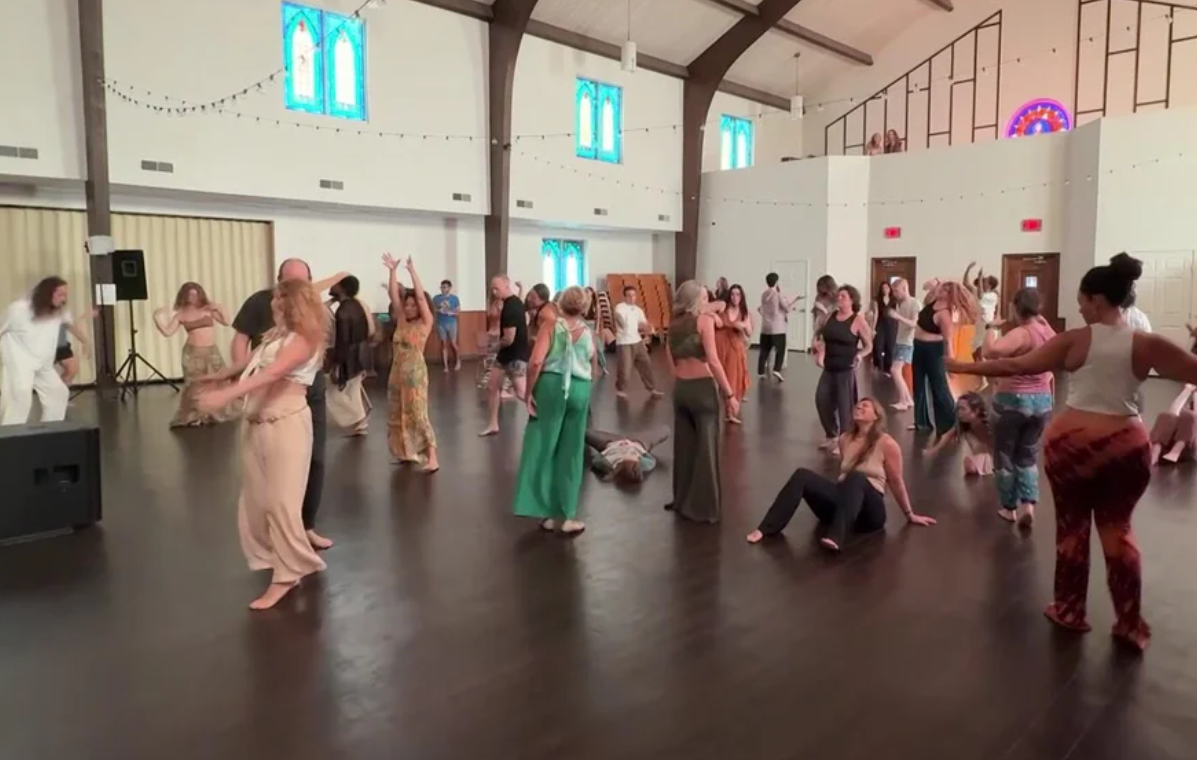
The Ecstatic Dancie movement is often misunderstood before it’s experienced. People hear the word dance and imagine choreography, steps, or performance. They hear the word ecstatic and assume intensity, spectacle, or emotional excess. These assumptions can create hesitation, especially for those who are already sensitive, overwhelmed, or unsure whether they “belong” in movement spaces. But ecstatic dance, as I practice and share it, is none of those things.

The Ecstatic Dancie Movement is Not:

    • a performance.
    • a workout.
    • a spiritual requirement.
    • a release that needs to look dramatic.

Ecstatic dancie is a listening practice.

At its core, it is a space where the body is allowed to move without instruction, correction, or expectation. There are no steps to learn, no shapes to achieve, and no energy to maintain. The body leads. The mind follows—if it wants to.

This distinction matters.

So much of modern life requires us to override our bodies. We sit when we want to move. We push through fatigue. We suppress impulses that don’t fit the moment. Over time, this creates a quiet disconnection. We stop trusting sensation and start relying almost entirely on thought.

Ecstatic dance gently reverses that pattern.

By removing choreography and performance, the body is no longer trying to get it right. There is no external reference point. Movement arises from sensation—weight shifting, breath deepening, energy rising or settling. Sometimes the movement is large. Often it is subtle. Both are valid.

This is what ecstatic dance is.

What it is not, is chaotic or uncontained.

Freedom does not mean lack of structure. The structure is internal. Boundaries exist through self-awareness, not rules imposed from the outside. Each person moves within their own space, guided by their own nervous system. This creates safety—not through control, but through presence.

Ecstatic dance is also not about emotional discharge for its own sake.

While release can happen, it is not the goal. The goal is listening. Release occurs naturally when the body feels heard. Sometimes that looks like shaking or stretching. Sometimes it looks like stillness. Sometimes nothing obvious happens at all—and that is just as meaningful.

There is no pressure to feel anything specific.

This is especially important for people who have been through trauma, burnout, or long-term stress. The body does not always want to move quickly or express outwardly. Ecstatic dance respects that. It allows the pace to be set from within.

Another common misconception is that ecstatic dance is about losing control.

In reality, it often restores it.

When the body is trusted to lead, a sense of agency returns. Choice becomes embodied. You move when you want to move. You stop when you want to stop. You rest when rest is needed. This reinforces a deep internal message: I am safe to listen to myself.

That message carries far beyond the dance space.

Over time, people notice that they make decisions with more clarity. They recognize boundaries sooner. They feel less compelled to override discomfort or force themselves into roles that don’t fit. This isn’t because they learned something new—it’s because they remembered something old.

Ecstatic dance is not about escaping the body.

It is about returning to it.

It doesn’t promise transformation.
It doesn’t demand belief.
It doesn’t ask for interpretation.

It simply offers a space where the body can speak in its own language—and be respected for doing so.

And often, that is more than enough.
 

Blog

Joy Is a Nervous System State, Not a Personality Trait

Joy is often misunderstood. It’s treated as something you either have or don’t have. A personality feature. A mood. A reflection of how well life is going. When joy fades, people tend to assume something is wrong with them—or that they need to think differently, try harder, or stay positive. But joy doesn’t originate in thought. It originates in the nervous system.

When the body feels safe, supported, and regulated, joy emerges naturally. Not as excitement. Not as constant happiness. But as lightness. Ease. A subtle sense of aliveness that doesn’t require a reason.

Stress interrupts this state.

Long periods of pressure, responsibility, or emotional strain keep the nervous system in survival mode. In that state, joy isn’t inaccessible because of mindset—it’s deprioritized because the body is focused on protection. There’s nothing wrong with that. It’s intelligent.

The problem arises when survival becomes the default.

Ecstatic dance offers a pathway out of that holding pattern.

Through movement, the body shifts out of bracing and into flow. Breath deepens. Muscles soften. Energy that was tied up in vigilance begins to circulate again. As regulation returns, joy often follows—not because it was chased, but because the system finally has room for it.

This kind of joy is quiet at first.

It might feel like curiosity.
Or playfulness.
Or a moment of lightness that surprises you.

There’s no need to amplify it. No need to perform it. The body recognizes it immediately, even if the mind questions it.

Play is one of the body’s natural regulation tools. It signals safety. It restores flexibility. It reminds the nervous system that not every moment requires guarding. For adults, play is often the first thing to be sacrificed—and the last thing to be restored.

Ecstatic dance reintroduces play without embarrassment or expectation. There’s no audience. No outcome. Just movement responding to sensation. This removes the pressure to be joyful and allows joy to arise organically.

Over time, people notice that lightness carries into daily life. Laughter comes more easily. Seriousness softens. Creativity returns. Not because circumstances changed, but because the body did.

Joy doesn’t need to be earned.
It doesn’t need justification.
It doesn’t need to be explained.

It’s a state the nervous system remembers when it’s allowed to feel safe again.

When the body moves freely, joy stops being something you try to access—and becomes something you recognize as already there.

Blog

Why Regulated Bodies Communicate Better

Most communication challenges aren’t caused by poor wording. They come from bodies that don’t feel settled. When the nervous system is tense or guarded, even kind words can land wrong. Tone sharpens without intention. Listening narrows. Reactions arrive faster than understanding. We may say the right thing, but our body is signaling something else entirely. Communication doesn’t begin with language. It begins with regulation.

A regulated body is one that feels safe enough to stay present. Breath moves freely. Muscles aren’t braced for impact. Attention is available instead of defensive. From this state, connection becomes simpler—not because people are trying harder, but because their system isn’t working against them.

Ecstatic dance supports this kind of regulation naturally.

When people move without being watched, corrected, or evaluated, the nervous system downshifts. There is no social role to maintain. No performance to manage. The body is allowed to arrive as it is. Over time, this creates a felt sense of safety that carries beyond the dance space.

And that safety changes how we relate.

People who feel more at home in their bodies tend to listen differently. They pause more easily. They respond instead of react. They can stay present during discomfort without needing to fix, defend, or withdraw.

This isn’t a communication technique.
It’s a physiological state.

Shared movement also builds a quiet form of connection that doesn’t rely on explanation. Moving in the same space, at the same time, without expectation, creates attunement. Not intimacy in the romantic sense—but familiarity. Recognition. Ease.

This kind of connection is subtle, but it matters.

When bodies are regulated, trust forms faster. Boundaries become clearer without needing to be rigid. Differences feel less threatening. Conversation flows with more patience because the system underneath it isn’t rushed.

Ecstatic dance doesn’t teach people how to communicate with others directly. It helps people communicate with themselves first. And when that internal relationship becomes steadier, external relationships benefit naturally.

People often notice that interactions feel less effortful afterward. There’s less overthinking. Less bracing. Less need to manage impressions. Communication becomes more honest because the body is no longer signaling danger where there is none.

Regulation creates room for connection.

When bodies feel safe, words don’t have to work so hard.


Blog

Awareness Expands When the Body Is Included

Many people come to awareness through observation. They learn to watch their thoughts. To notice patterns. To step back and witness what’s happening inside. This kind of awareness can be valuable. It creates perspective. It helps reduce reactivity. It offers space between stimulus and response. But awareness that stays only in the mind has limits. It can become distant. Detached. More like monitoring than inhabiting.

The body is not separate from awareness. It is one of its primary gateways.

When attention moves into sensation—into breath, weight, rhythm, and impulse—awareness changes quality. It becomes less conceptual and more immediate. Less about understanding and more about being here.

Ecstatic dance invites this shift gently.

There is no instruction to focus. No technique to master. Awareness naturally follows movement because movement is happening now. The body does not operate in past or future. It responds to the present moment by design.

As people move, they often notice that awareness widens without effort. Sensation becomes clearer. Subtle changes are easier to feel. The mind quiets not because it was silenced, but because it is no longer carrying the full responsibility of attention.

This is expansion without strain.

Instead of trying to reach heightened states, the body offers grounded presence. Instead of seeking insight, awareness arrives through experience. Movement becomes a conversation between attention and sensation, each informing the other.

Sometimes this feels spacious.
Sometimes it feels calm.
Sometimes it feels simply real.

There is no need to label it.

Conscious expansion does not always look dramatic. Often it looks like clarity. Like simplicity. Like being less divided between what you think and what you feel. When the body is included, awareness becomes whole.

This inclusion also brings humility. The body reveals truths the mind may overlook. It shows where tension remains, where energy flows easily, where boundaries exist. Awareness deepens not by rising above the physical, but by moving fully into it.

Ecstatic dance supports this integration naturally. It doesn’t ask you to transcend the body. It asks you to listen to it. And in doing so, awareness stops hovering and starts inhabiting.

Expansion happens not by leaving the body behind—but by letting it participate.

When the body is welcomed into awareness, presence becomes lived rather than observed.

And that changes everything.

Blog

Confidence Begins in the Body, Not the Mirror

Most of us were taught to look for confidence outside of ourselves. In reflections. In approval. In how we appear to others. We learn early on to measure confidence by posture we imitate, words we rehearse, or roles we try to perform convincingly. And while those things can create the appearance of confidence, they often don’t change how we actually feel inside. Because confidence isn’t something the body learns by being watched. It’s something the body learns by being trusted.

True confidence has less to do with how you look and more to do with how safe you feel inhabiting yourself. When the body feels regulated, present, and allowed to move honestly, confidence arises naturally. Not as bravado. Not as performance. But as steadiness.

Ecstatic dance invites this steadiness without asking you to “work on” confidence directly.

There is no right way to move. No shape to achieve. No expression to maintain. The body is free to explore its own rhythm, weight, and impulse without correction. Over time, this freedom rebuilds something essential: trust in internal signals.

When you listen to your body and respond to it, even in small ways, you reinforce a simple truth—I can rely on myself.

That reliance is the foundation of confidence.

As people move without being evaluated, they often notice a subtle shift. Movements become more decisive. Pauses feel intentional instead of awkward. There is less checking, less adjusting, less self-monitoring. The body begins to take up space without asking permission.

This isn’t learned through affirmation.
It’s learned through experience.

Confidence grows when the body senses that it will not be overridden or corrected for being authentic. When movement is welcomed exactly as it is, the nervous system relaxes. And from that relaxation comes presence.

Presence is what others recognize as confidence.

Not loudness.
Not dominance.
Not perfection.

Presence.

Over time, this embodied confidence carries into daily life. People stand differently. Speak more clearly. Make decisions with less second-guessing. Not because they practiced being confident, but because their body remembers what it feels like to be self-directed.

This kind of confidence doesn’t depend on mirrors, compliments, or comparisons. It doesn’t disappear when circumstances change. It’s quiet. Durable. Internal.

And once the body knows it, it doesn’t forget.

Confidence begins when you stop trying to look confident—and start letting your body lead.


Blog

The Body Remembers What the Mind Learned to Forget

There are experiences the mind moves away from in order to keep going. It does this intelligently. It filters. It compartmentalizes. It helps us function, work, care for others, and survive moments that would otherwise be overwhelming. This forgetting is not failure. It is protection. But while the mind learns how to move on, the body remembers. Not as stories. Not as images, but as sensation.

A tight jaw that never quite relaxes.
A shallow breath that feels normal now.
A constant readiness in the shoulders or hips.
A sense of being alert even in safe moments.

These are not problems to be fixed. They are signals of a system that adapted beautifully at the time and was never given the opportunity to complete what it started.

Trauma is not only what happened.
It is what the body prepared for that never got resolved.

Ecstatic dance offers a gentle doorway into that completion.

There is no requirement to recall memories or name events. The body doesn’t need a narrative to release what it’s been holding. It only needs conditions that feel safe enough to soften. Rhythm. Space. Permission. Choice.

When movement is unstructured and self-led, the body begins to express in its own language. Sometimes that language is subtle. A sway. A stretch. A pause. Other times it may look like shaking, circling, or slowing down far more than expected.

Nothing is forced.
Nothing is interpreted.
Nothing is rushed.

This is important.

Trauma release is not something to do. It is something to allow.

The nervous system cannot be argued into safety. It must experience it. When the body senses that it is no longer required to stay braced, it begins to let go in small, intelligent increments. Often so small that the mind barely notices—until afterward.

People sometimes describe feeling unexpectedly calm. Or grounded. Or tired in a way that feels clean rather than depleted. Others notice that reactions soften in the days that follow. Triggers lose some of their charge. Sleep deepens. Breath becomes fuller without effort.

There may be no dramatic moment to point to.
Just a quiet shift.

This is how the body completes unfinished responses. Gently. Privately. At its own pace.

Ecstatic dance is not about reliving trauma. It is about restoring choice. Choice to move. Choice to stop. Choice to feel. Choice to rest. Choice to express or remain still.

This sense of agency is central to healing.

When the body is no longer overridden, when it is listened to rather than directed, it begins to trust again. And with that trust comes release—not because it was demanded, but because it was finally safe to do so.

The mind may never need to remember everything it forgot.

The body already knows what to do with it.

Blog

When Thinking Harder Isn’t Helping Anymore

There comes a point when the mind has done everything it knows how to do. You’ve reflected. You’ve processed. You’ve tried to understand what happened, why it happened, and how to prevent it from happening again. You’ve replayed conversations, examined patterns, and searched for insight. And yet, something still feels unsettled. Not dramatic. Just unresolved.

This is often the moment when people assume they’re failing at healing. That they haven’t thought deeply enough or worked hard enough. But more often, it’s simply a sign that the mind has reached the edge of its usefulness for that particular layer of recovery.

Because not everything that weighs on us lives in thought.

The body holds experiences differently than the mind does. Stress, emotional shock, prolonged pressure, and overwhelm register as sensation long before they become stories. Tightness in the chest. A shallow breath. Restlessness that doesn’t seem connected to any specific thought. Fatigue that doesn’t improve with rest.

Trying to think your way out of these states can feel like pushing against fog.

Ecstatic dance offers a different entry point.

Instead of asking What’s wrong?
It asks What does the body need to express right now?

There is no requirement to name emotions. No pressure to relive memories. No expectation to reach conclusions. Movement becomes a way for the body to communicate without needing translation.

For many people, this is where relief begins.

As the body moves, something softens. The nervous system shifts from constant alertness toward regulation. The breath deepens naturally. Muscles that have been bracing for reasons long forgotten begin to let go. The mind, no longer tasked with solving everything, finally has space to rest.

This is not avoidance.
It’s completion.

The mind is excellent at making meaning.
The body is excellent at releasing load.

When we try to force emotional recovery through thought alone, we often miss the layer where the tension is actually stored. Movement reaches that layer gently. Without interrogation. Without pressure.

Sometimes people notice a sense of calm afterward that feels unfamiliar. Not the relief of an answer, but the relief of quiet. Other times, there’s a subtle emotional lightness, as if something heavy has been set down without ceremony.

No breakthroughs.
No declarations.
Just ease.

And often, that’s enough.

Over time, this kind of embodied release supports mental clarity rather than competing with it. Thoughts become less reactive. Emotional swings soften. Perspective widens naturally, not because it was forced, but because the body is no longer carrying so much unspoken tension.

There are moments when insight matters.
And there are moments when regulation comes first.

When thinking harder isn’t helping anymore, it may be time to let the body lead—just long enough for the mind to catch its breath.

Healing doesn’t always need more understanding.

Sometimes, it needs movement.


Blog

When the Body Heals Faster Than the Mind Can Understand

There are moments when something shifts before we can explain it. The body feels lighter. Breath moves more easily. Tension that had been quietly living in the background softens, sometimes without warning. And the mind, always wanting to keep up, begins searching for reasons. What changed? What did I do differently? Why do I feel better? But the body does not wait for explanations.

For many people, healing is expected to be logical, measurable, and sequential. We’re taught that improvement should arrive step by step, accompanied by clear understanding. Yet the body operates on a different intelligence. It responds to rhythm, sensation, safety, and permission long before it responds to ideas.

This is something I’ve seen again and again.

People come into movement carrying tight shoulders, shallow breath, restless energy, or a heaviness they’ve grown used to. They don’t come to fix anything. They come simply to move. And often, before they’ve even noticed what’s happening, the body begins to reorganize itself.

Not because it was forced.
Not because it was instructed.
But because it was finally allowed.

The body is constantly working to return to balance. Stress, illness, and emotional strain interrupt that process. Muscles hold. Breath shortens. Systems stay on alert long after the original trigger has passed. Over time, this holding becomes familiar. It starts to feel like “just how things are.”

Movement changes that conversation.

When the body is given space to move without choreography, judgment, or performance, it begins completing patterns that were paused. A breath deepens. A spine unwinds. A subtle tremor releases. These are not dramatic events. They are quiet corrections. And they often happen faster than the mind can track.

The mind tends to ask for permission first.
The body only needs safety.

In ecstatic dance, there is no requirement to analyze what’s happening. There is no expectation to feel a certain way. The invitation is simple: listen to sensation and let it guide you. Sometimes that looks slow and grounded. Sometimes it looks playful. Sometimes it looks like very little at all.

And yet, something shifts.

People are often surprised by how quickly they feel different. Not “fixed,” not transformed overnight, but subtly changed. More present. More settled. More at home inside themselves. The mind may still be sorting through questions, but the body has already responded.

This doesn’t mean the mind isn’t important. It means the mind doesn’t have to lead every part of healing.

The body has its own language. It speaks through rhythm, through weight, through breath, through impulse. When we stop interrupting that language, when we stop asking it to justify itself, it begins doing what it has always known how to do.

Heal.
Regulate.
Restore.

Sometimes healing doesn’t arrive with clarity or insight. Sometimes it arrives as ease. As quiet. As the absence of something that used to be there.

And later, if the mind wants to understand, it can.

But the body doesn’t wait.

It never has.